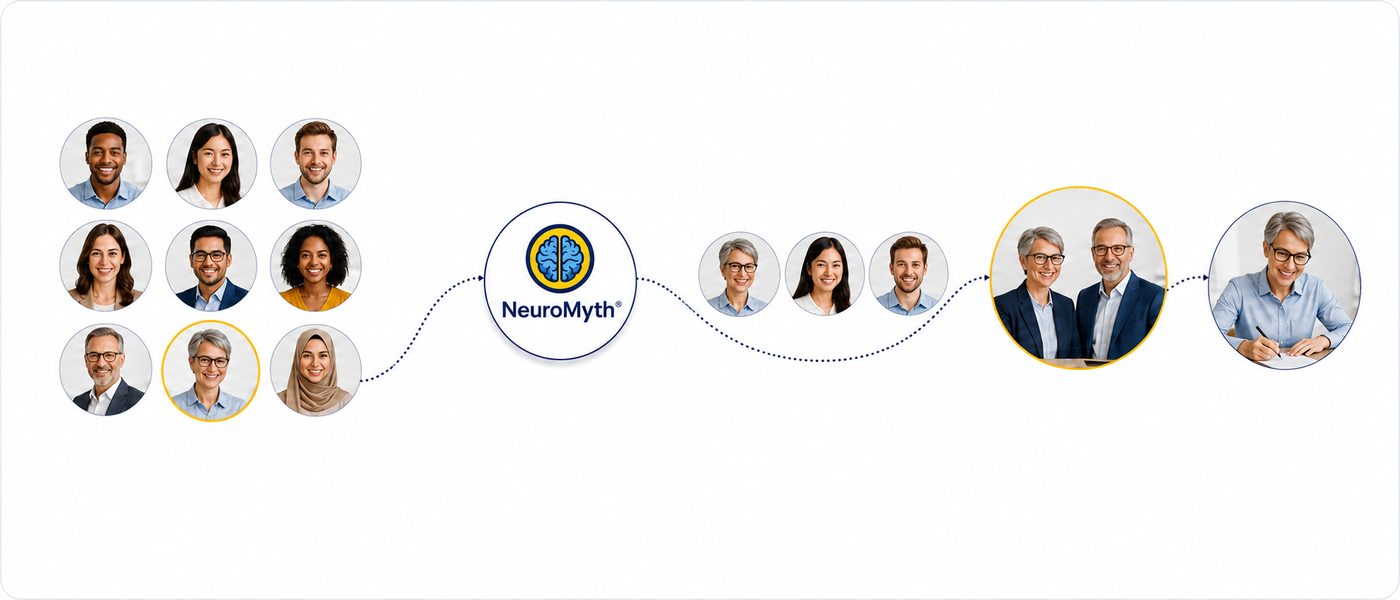
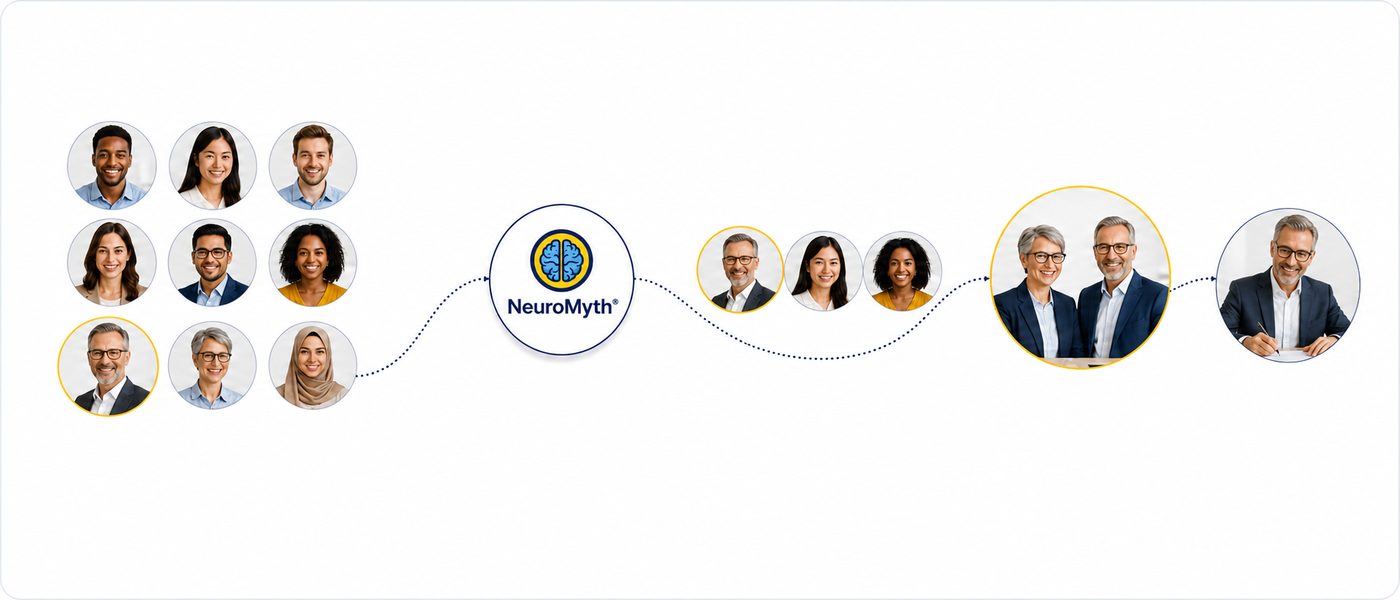
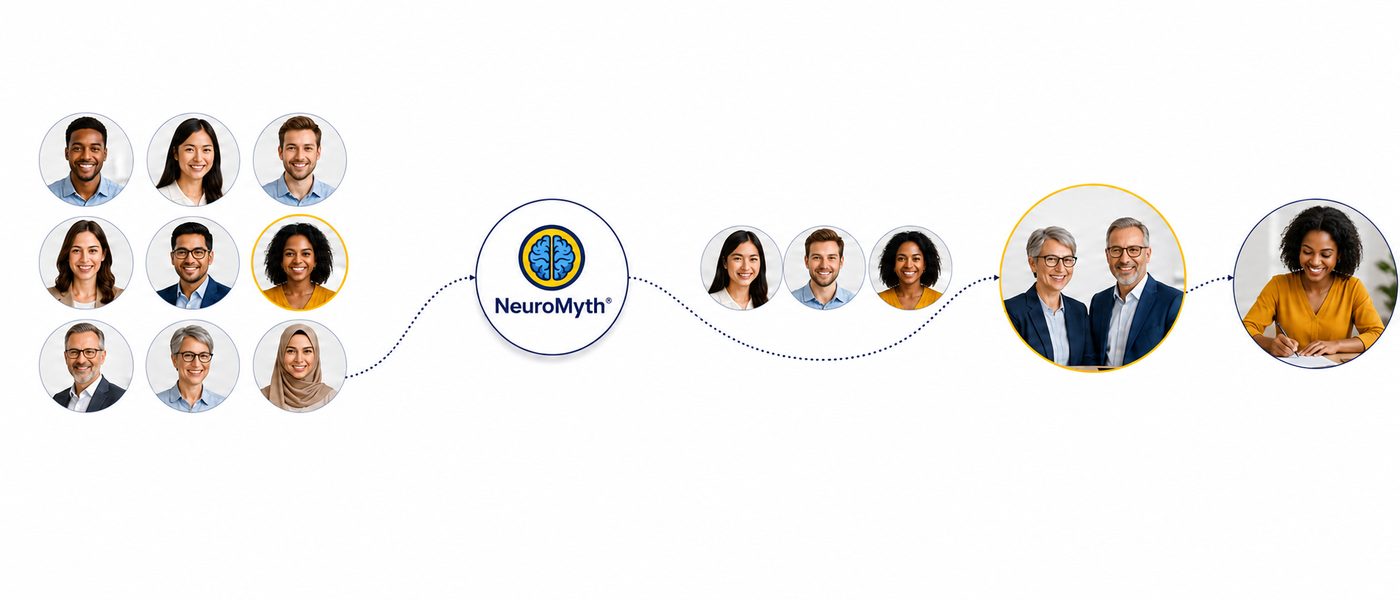
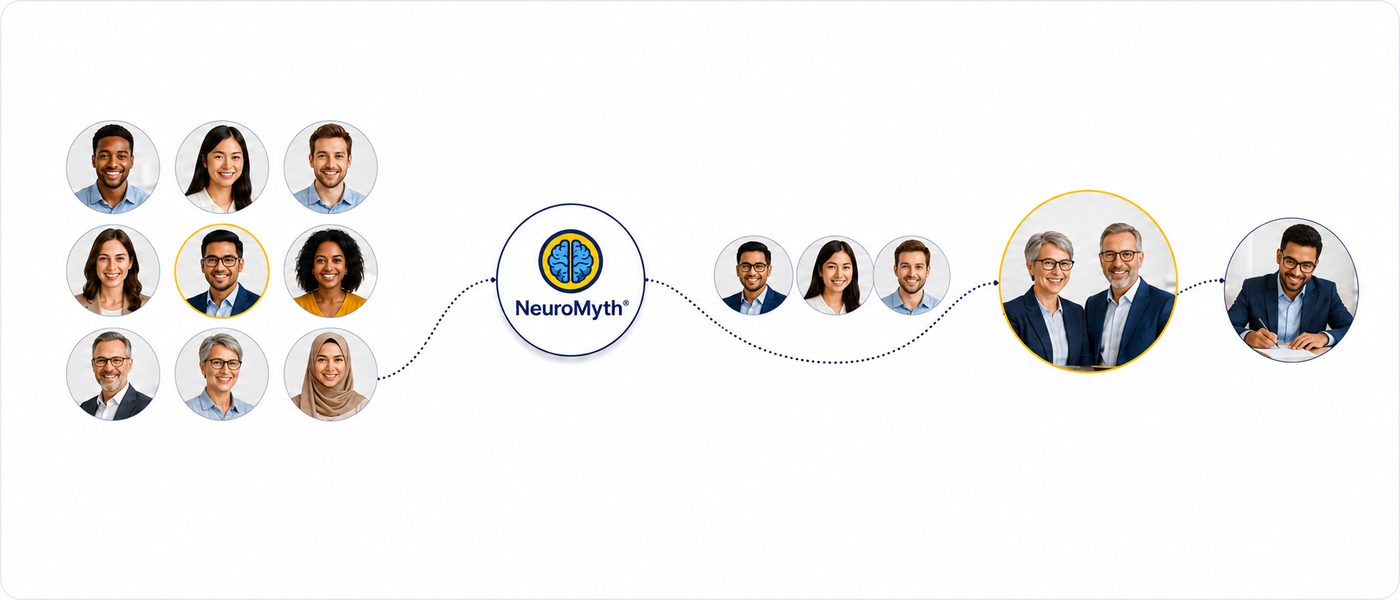
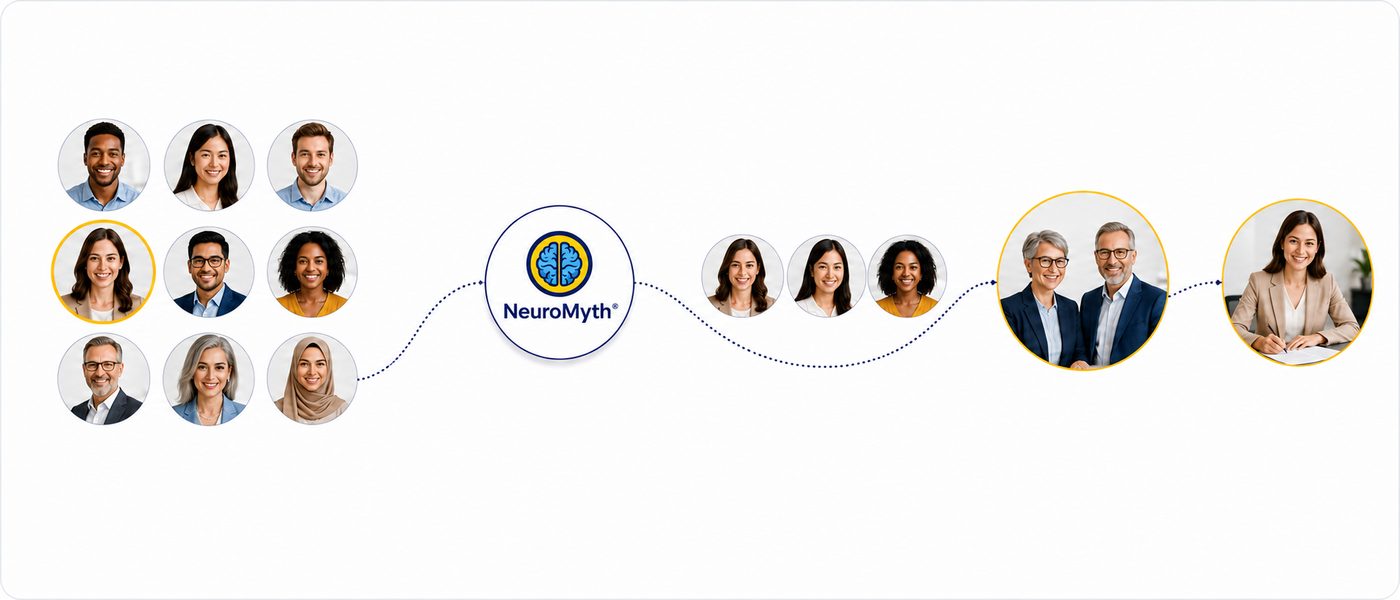
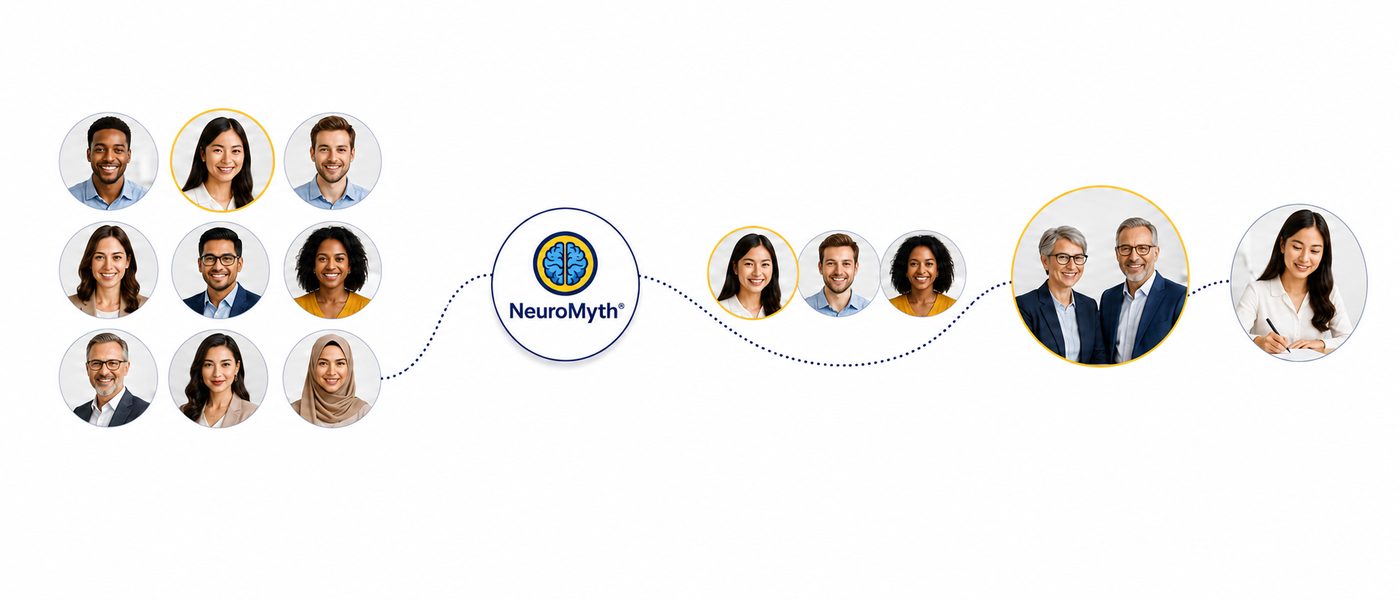
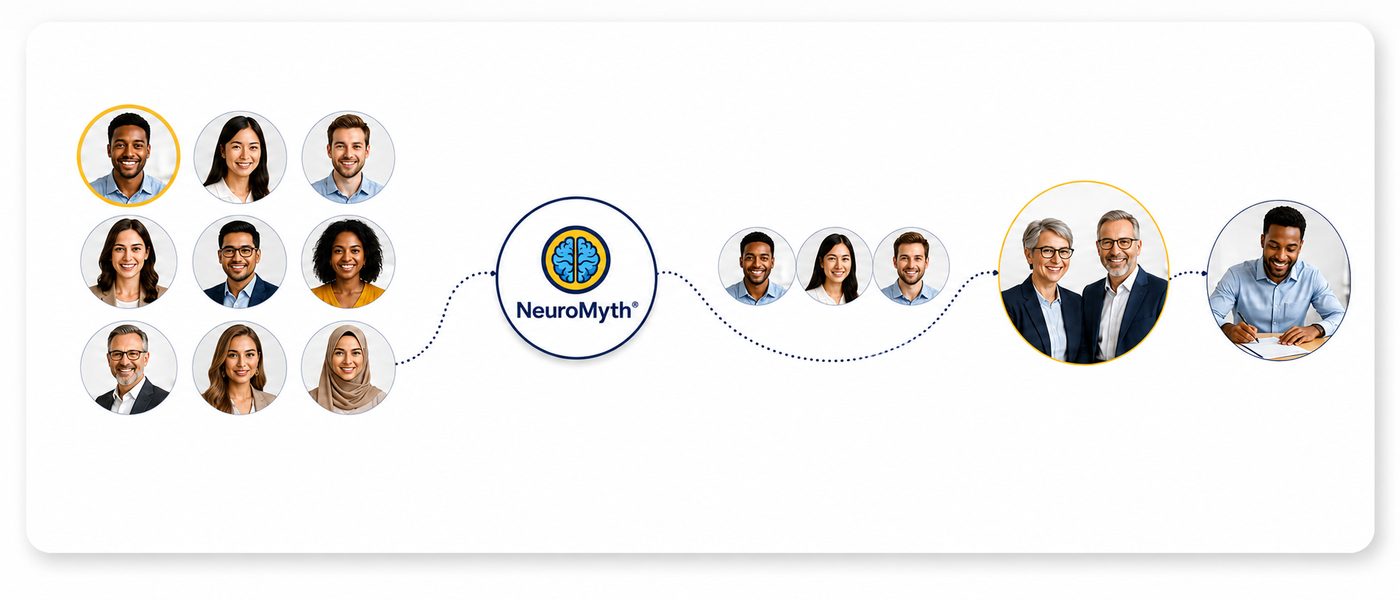
Every choice in a narrative — who acts, who suffers, how conflict resolves — reflects stable cognitive and behavioral patterns. NeuroMyth reads those patterns. Not the story. The structure beneath it.
A questionnaire tells the candidate what is being measured — which means it tells them what to optimize. A free story does neither. There are no instructions beyond "write whatever comes to mind." No right direction, no target to aim at. What emerges is genuinely spontaneous — and genuinely revealing.
When there is nothing to aim at, there is nothing to rehearse. The candidate cannot optimize a response they do not understand. This is structural protection against coaching — not a policy.
The choices a candidate makes without thinking — who acts, who is acted upon, how problems resolve — are precisely those that predict real behavior. They emerge naturally only when the person is not managing an impression.
The structural patterns in a narrative remain consistent regardless of the story's content, setting, or genre. A candidate who rewrites the story tomorrow will produce the same structural signature. This is what makes the output decision-relevant.
NeuroMyth analyzes the structural architecture of a narrative — not its content, not its style, not its emotional register. The patterns that carry behavioral signal are properties of how the story is built, not what it is about. Describing them in detail would simply create a new coaching guide. So we don't.
— NeuroMyth analytical framework
None of these predict decision behavior.
All of them carry bias.
Removing them is not a limitation — it is a deliberate design choice that makes the output fairer and more legally defensible.
The depth is chosen at the moment the report is requested — not at the moment the story is written. The candidate always does exactly the same thing.
See a real example across all four levels →
NeuroMyth uses AI to analyse the structural patterns in a narrative and generate the initial output. This is what makes it fast, consistent, and scalable across 13 languages with no loss of quality.
But every report is reviewed by a certified analyst before it is delivered. Not as a regulatory formality — as a quality guarantee. The analyst validates the output, checks for edge cases, and ensures the report is actionable for the specific hiring context.
This is what "human-in-the-loop" means in practice: not a checkbox, but a professional who is accountable for what you receive.
NeuroMyth operates in full compliance with the EU AI Act. The human review requirement is built into the process — not added afterwards. Read our AI Act statement →
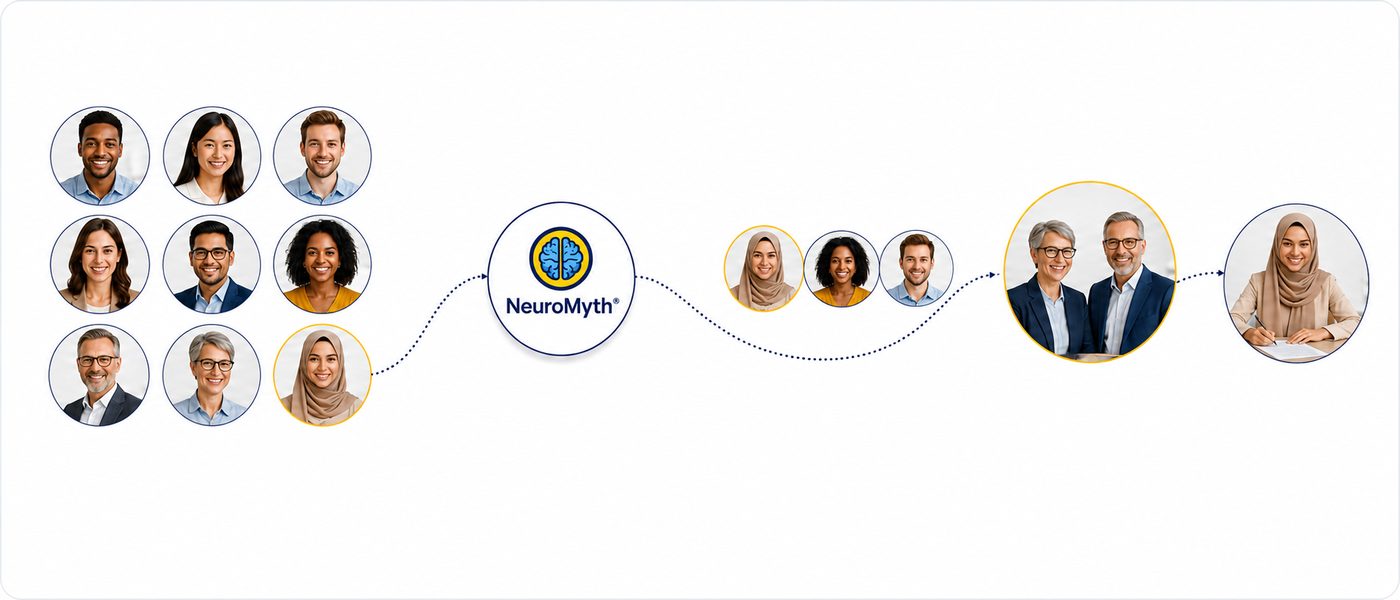
On paper, with no device. 30 minutes, no instructions beyond the prompt. The story is submitted via post, scan, or the online test interface.
The narrative pattern analysis engine processes the story and generates the output structure for the requested depth level.
A human analyst validates the output, checks edge cases, and confirms the report is appropriate for delivery. No report leaves without this step.
The final report reaches the HR manager within 2–3 hours of submission. Structured, actionable, ready to support the hiring decision.
Whoever they are, wherever they come from — the right person reaches the role. Handwriting, spelling, vocabulary, cultural references: none of these are measured. None of them predict decision behavior. All of them carry bias.
Five real assessments, same system, same analyst review, same output as paying clients. Form your own view before deciding anything.
Get 5 Free TRY →